
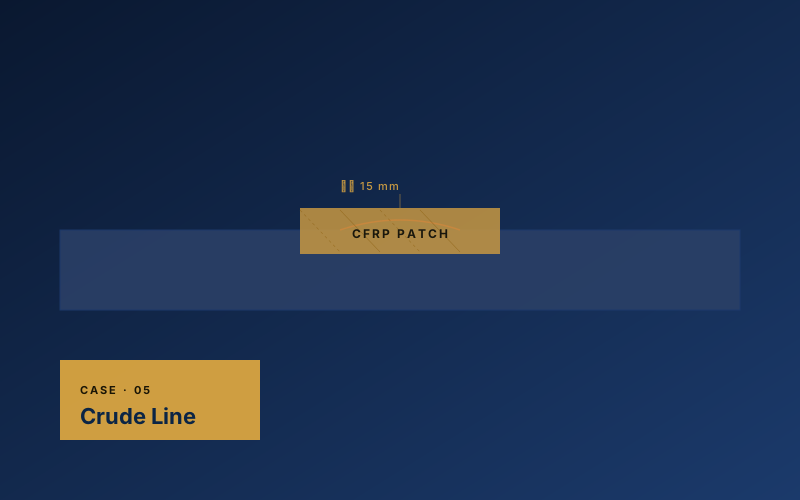
Carbon fiber is a high-tech material widely used in high-pressure pipes, pressure vessels and structural reinforcement.
Limits of Traditional Methods
- For medium- and low-pressure gas lines, welding or pipe replacement is possible after depressurisation or shutdown; welding on medium-to-high-pressure gas lines is dangerous
- Replacement carries heavy economic and social cost — heavily constrained in dense or high-traffic areas
- Mechanical clamps wrap a metal sleeve over the defect to restore pressure capacity. Useful where pipe is leaking, but expensive and hard to install on non-leaking pipe
Why Composite Repair Wins
Composite repair is efficient, modern and common in oil and gas maintenance and overhaul: hot-work-free, no fire, with live-pressure repair for non-leaking sections. Carbon fiber's tensile strength and modulus put it at the leading edge of FRP reinforcement.
Technical Principle
Filler resin levels the defect; a dedicated adhesive bonds fiber cloth circumferentially to form the composite layer. After cure, the layer is integral with the pipe and carries internal pressure where the wall is lost — restoring design operating pressure.
Performance Data
- Tensile strength > 3500 MPa, well above steel and glass fiber
- Composite modulus ~ 207 × 10³ MPa, nearly identical to steel — excellent strain compatibility with the host pipe
- The reinforcement layer carries internal pressure at the defect